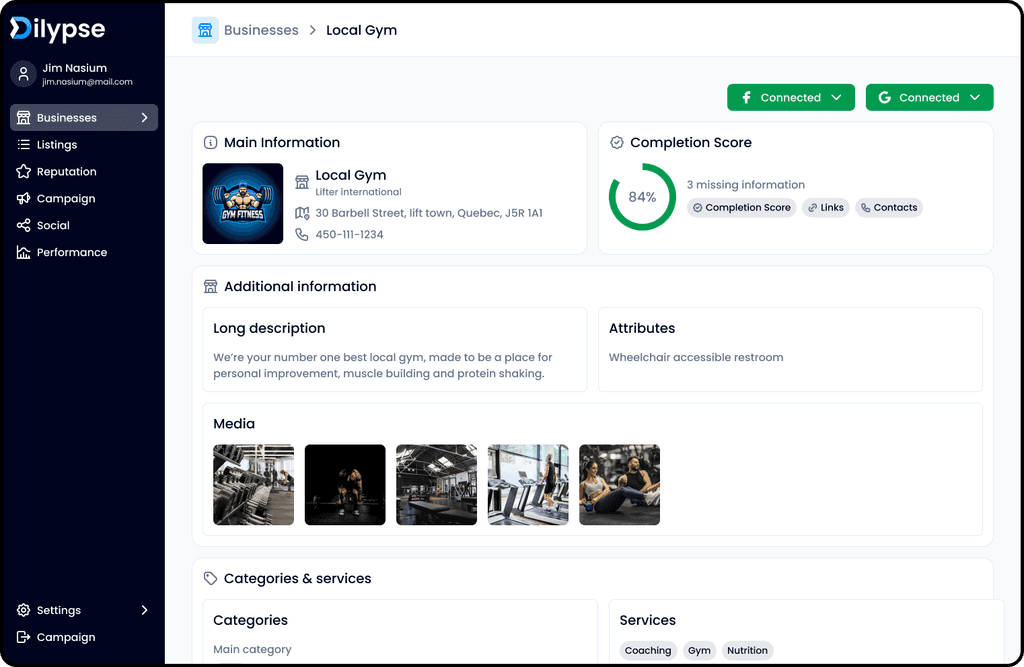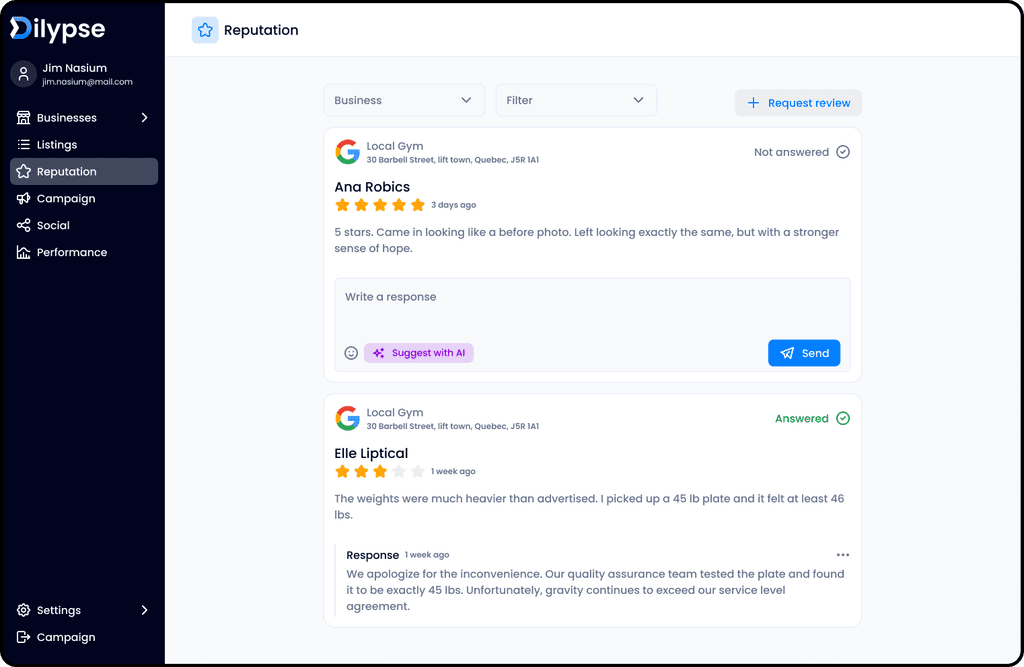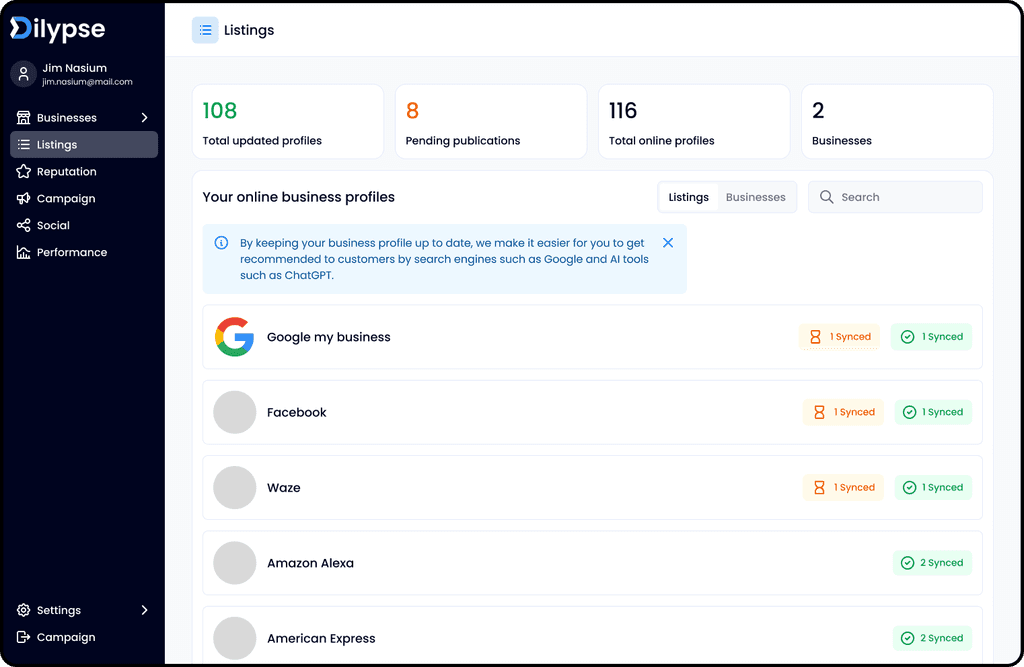
Full platform redesign
Dilypse is an all-in-one local marketing platform helping businesses manage their online presence, listings, reviews, and social media, across 50+ directories from a single platform.
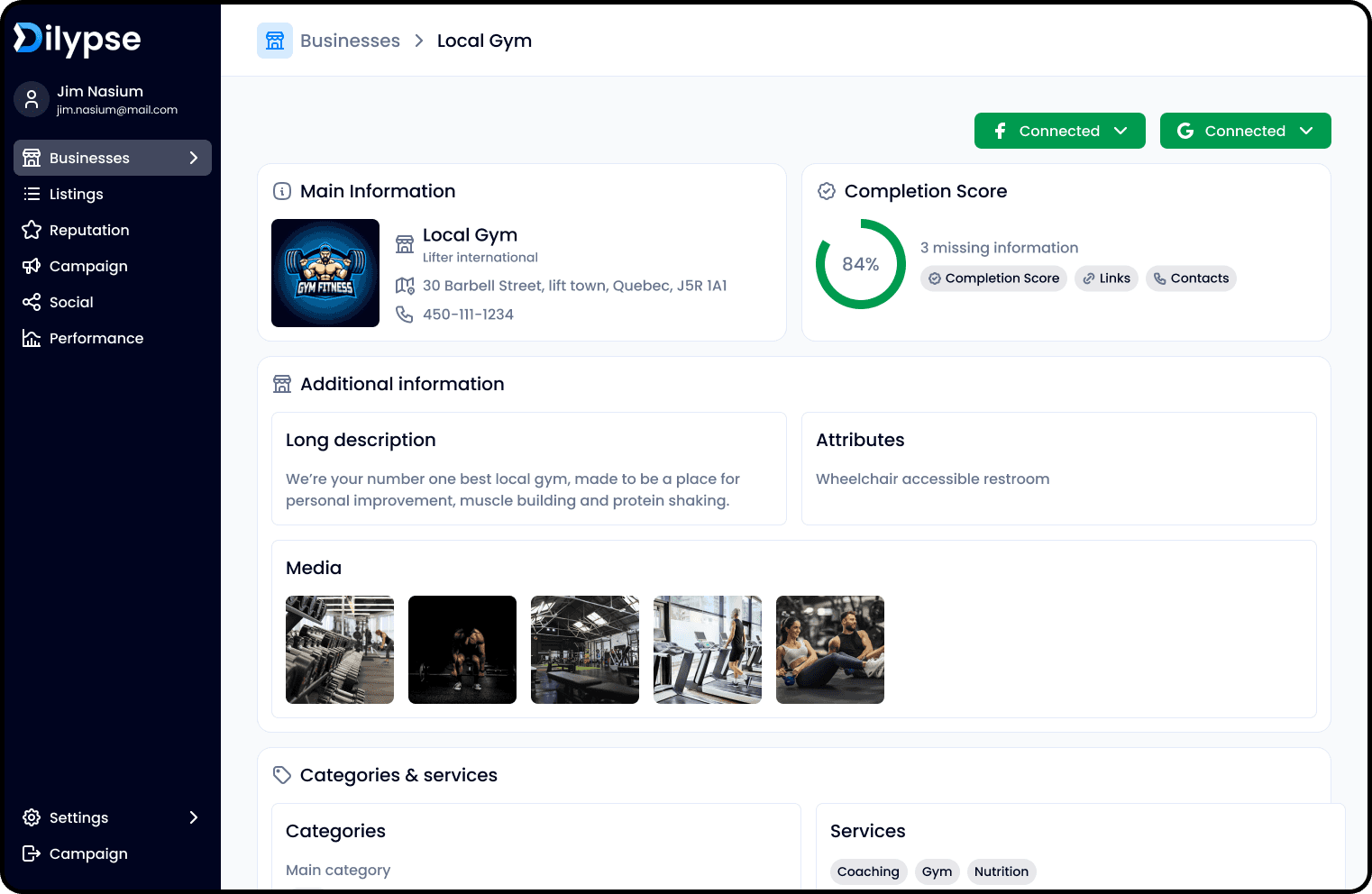
My role
I joined as the sole designer post-acquisition, working closely with the CEO, CTO, and later a PM to redefine product direction and prioritize what to rebuild, cut, or build for launch.
The Problem
The acquired platform was buggy, unreliable, and difficult to use. Agencies avoided exposing it to clients and instead relied on internal teams to operate it on their behalf. As a result, sales struggled to position and sell the product, and it had no clear path to scalable growth.
How I Tackled This
I approached the redesign feature by feature, questioning the purpose of each one, removing unnecessary complexity, and identifying gaps in functionality. The goal was to rebuild the product logic from the ground up into something scalable, usable, and commercially viable.
Building a design system from scratch
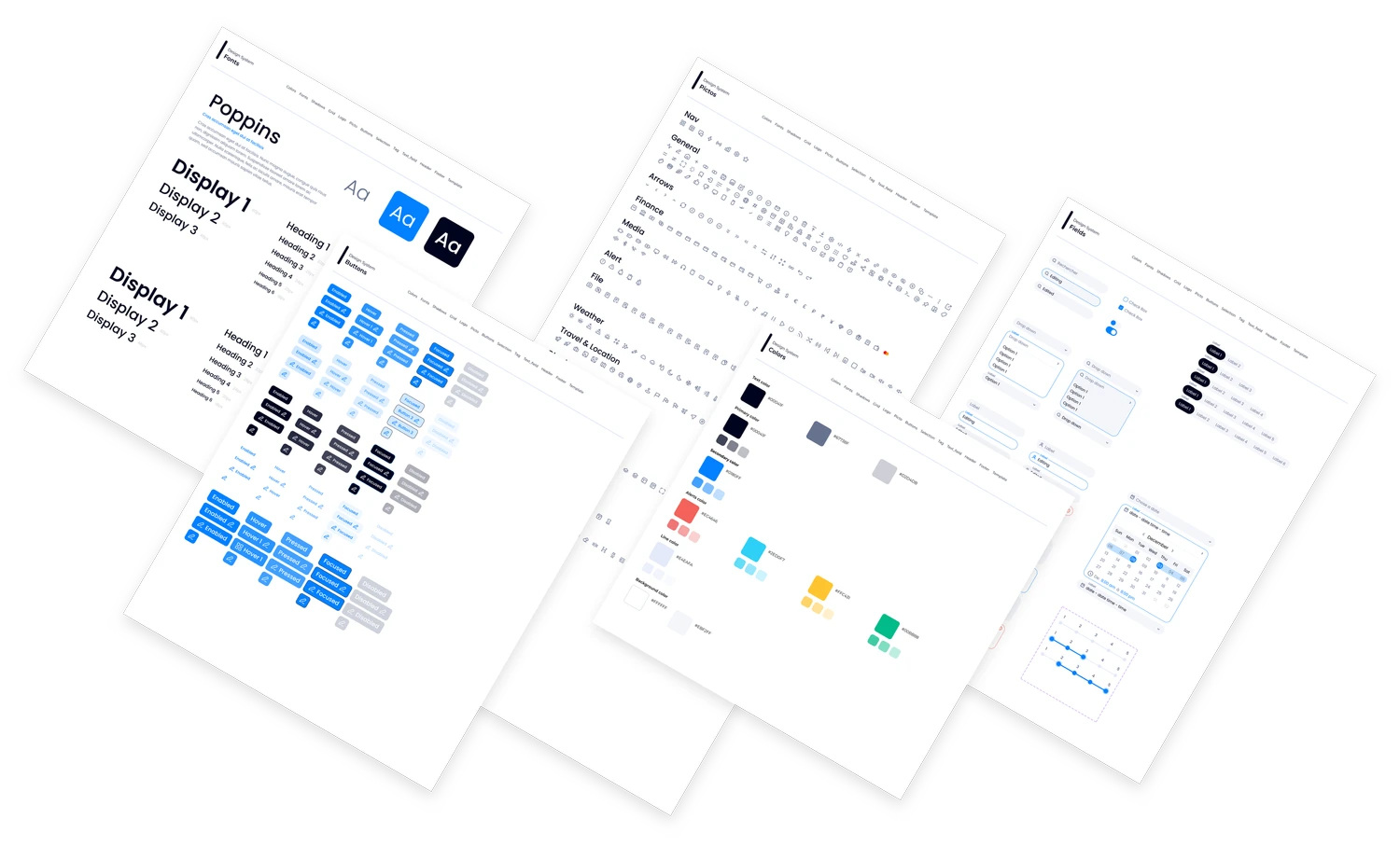
I built a new design system from scratch in collaboration with engineering before redesigning features. This established a shared component library that improved consistency across the product and aligned design and development from the start.
Redesigning from the ground up
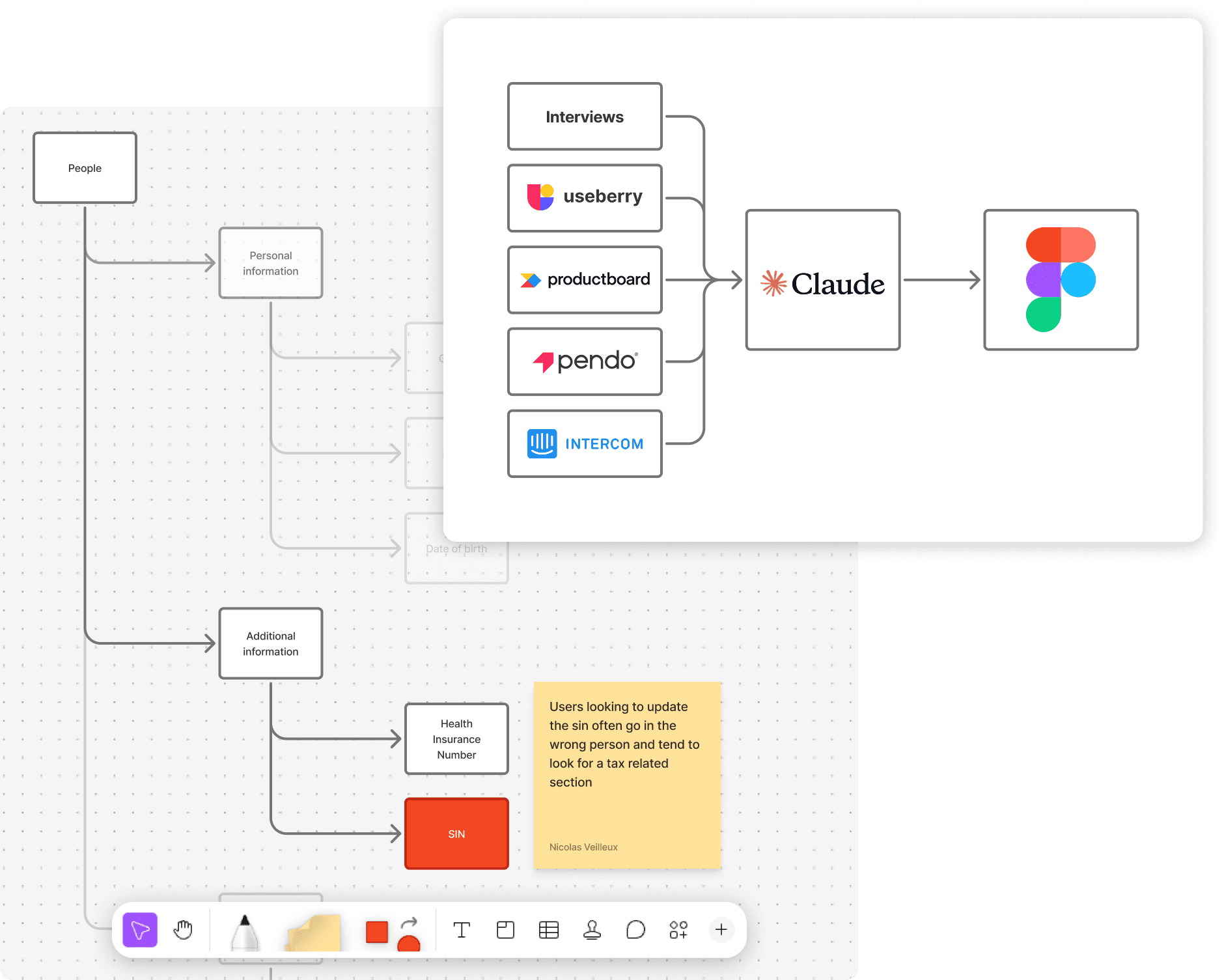
Each feature was treated as a standalone product. I combined client interviews, input from the CEO, and collaboration with the PM to evaluate what each feature was trying to solve, what users actually needed, and what could be removed or simplified. This process was repeated across the entire platform to rebuild it from first principles.
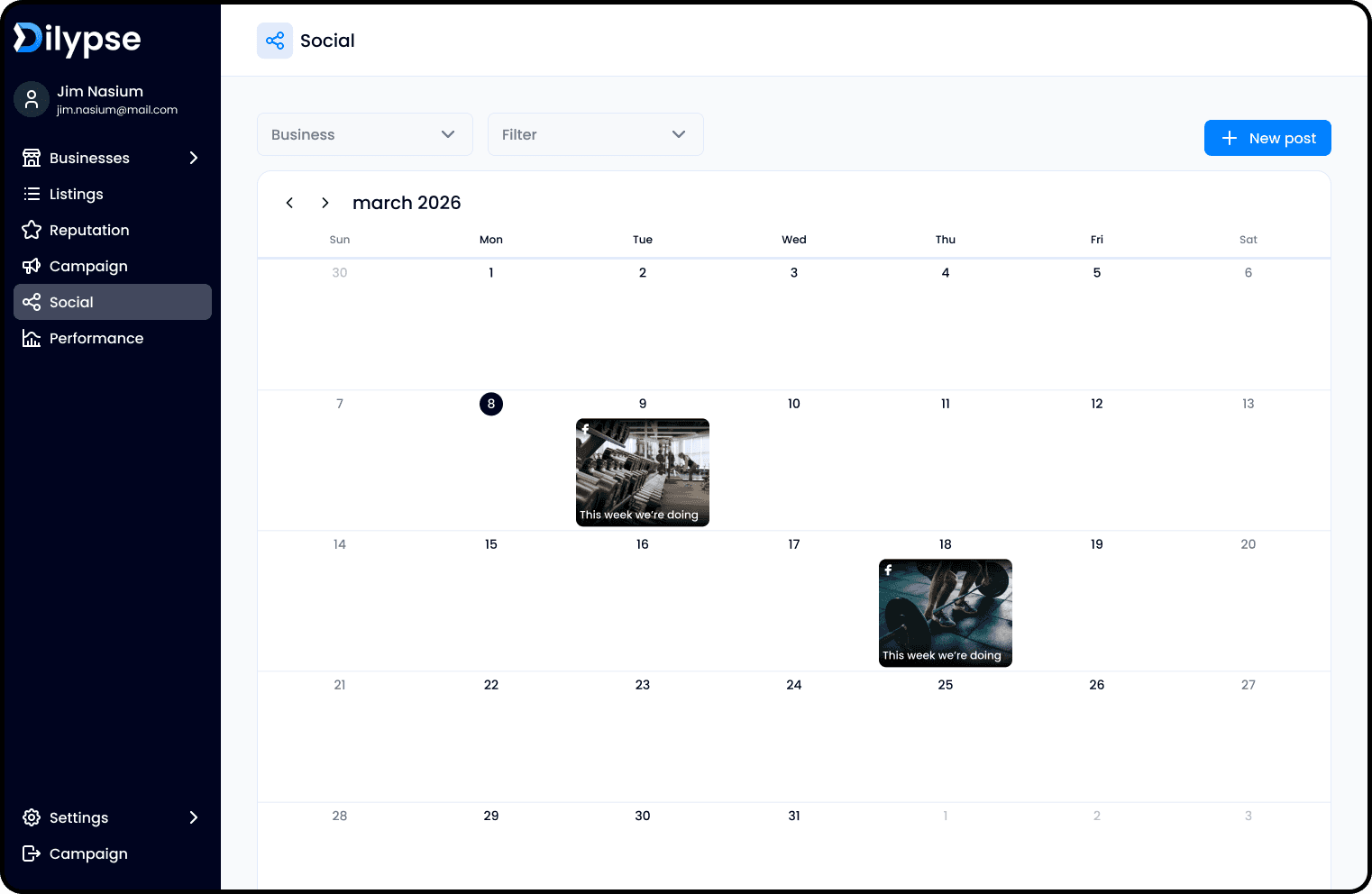
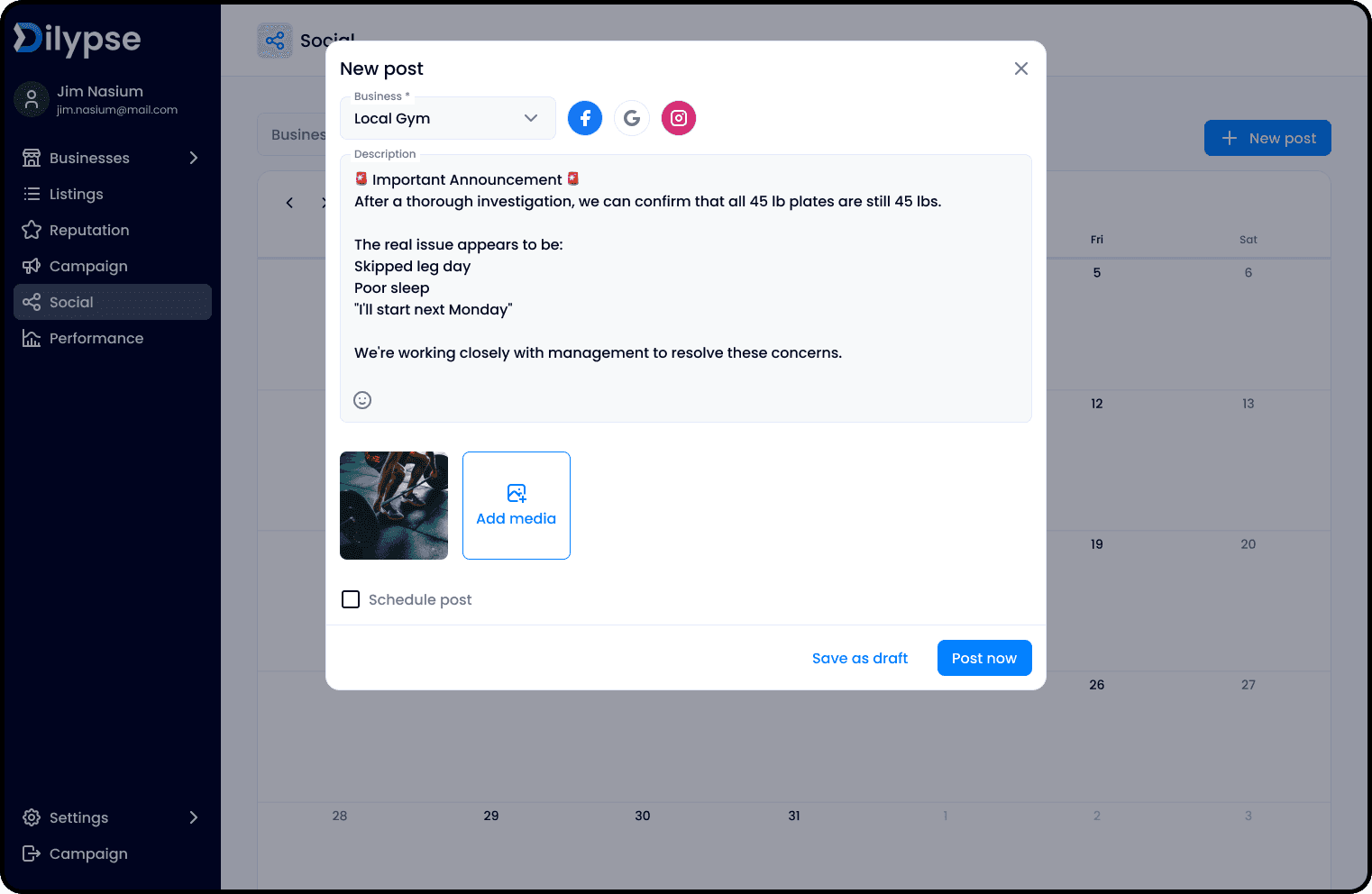
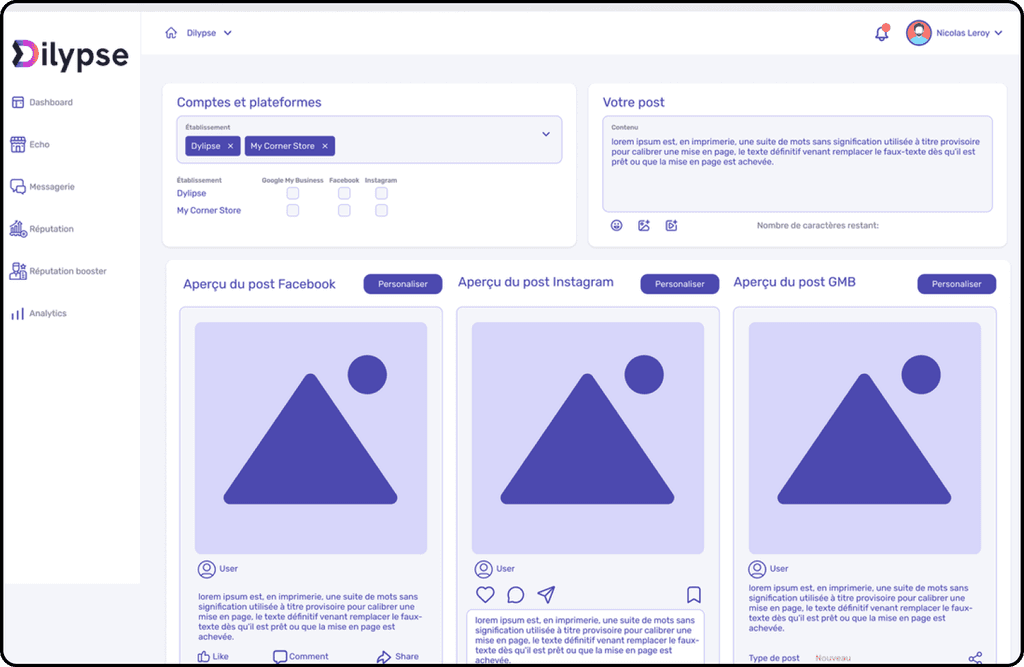
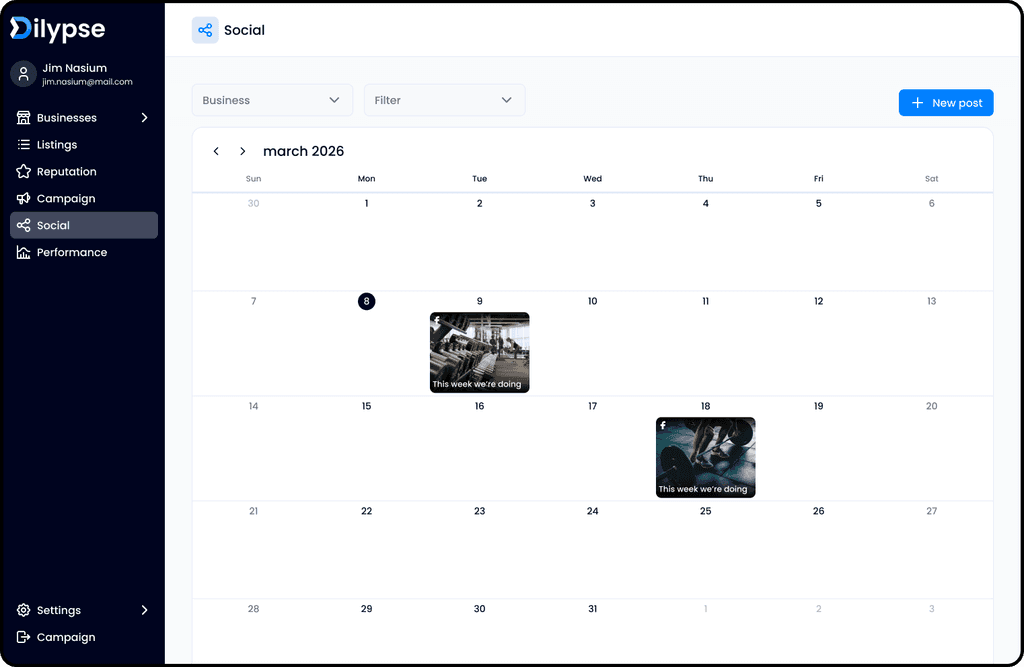
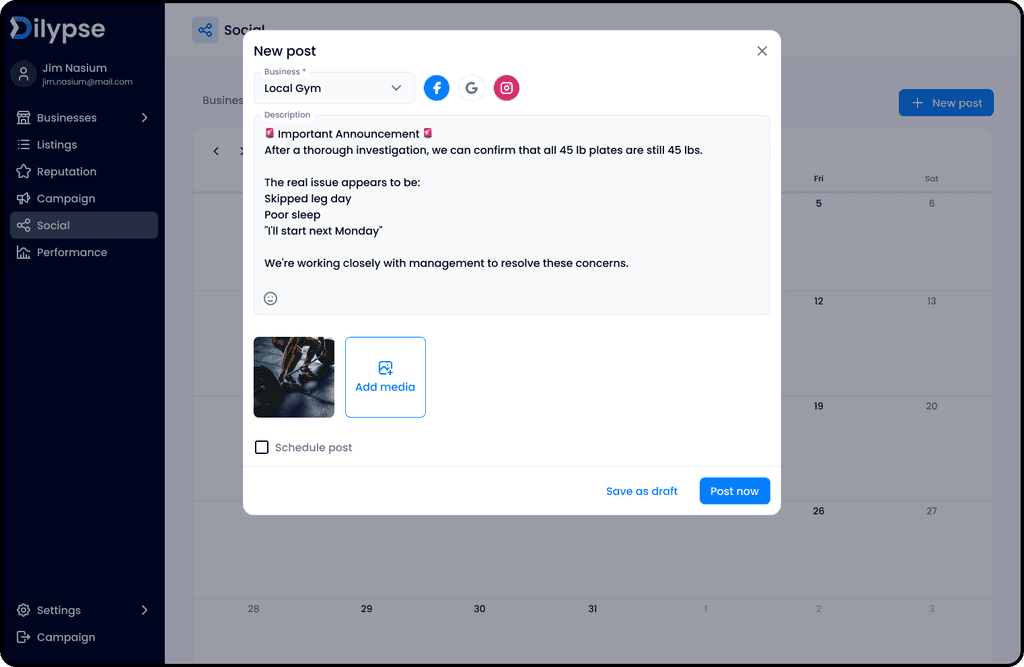
Ex. Simplifying Social Media
The original social media tool allowed highly granular post customization per platform, resulting in a complex experience
User interviews showed that this level of control was unnecessary for most local businesses, who primarily needed a way to plan and schedule content efficiently rather than optimize per platform.
We removed per-platform editing complexity and replaced it with a simple content calendar, enabling faster planning and lower friction.
The Results
Shift from internal execution to client self-serve
After simplifying interactions and improving usability, agencies began letting end-users interact directly with the platform. This reduced operational overhead and enabled a more scalable self-serve model.
Increased sales confidence during demos
The sales team explicitly shared that they felt more confident showcasing the product and began actively presenting it live during demos rather than describing it indirectly.
Business model alignment (white-label + multi-location)
The product was repositioned with a stronger agency-focused model, introducing white-labeling and multi-location support. This led to agencies bundling it into all their contracts, contributing to increased adoption and revenue growth.